
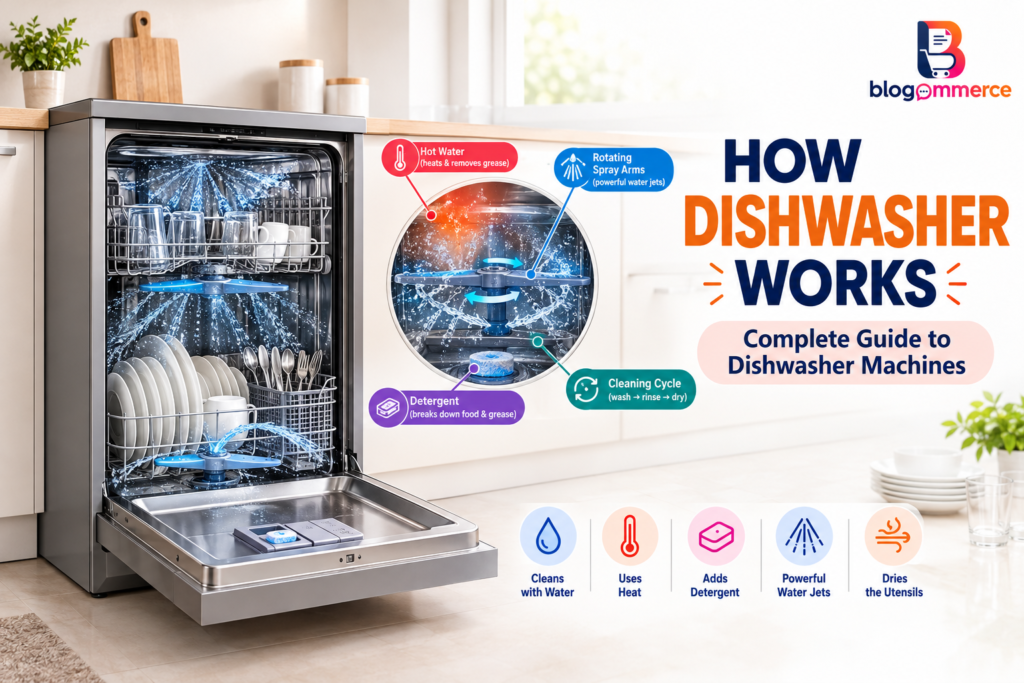
A dishwasher is one of the most useful kitchen appliances for modern homes. It saves time, reduces the effort required for cleaning utensils, and provides an efficient way to wash plates, glasses, bowls, spoons, and other kitchen items. But how dishwasher works is a common question for people planning to buy one for their home.
A modern dishwasher machine uses a combination of water, detergent, heat, and powerful water jets to clean dirty dishes. Unlike traditional hand washing, a dishwasher automatically completes multiple stages of cleaning with minimal human effort.
In this guide, we will explain how a dishwasher washing machine works, its major components, cleaning process, benefits, and important factors to consider when choosing a dishwasher machine for home.
What Is a Dishwasher?
A dishwasher is an automatic appliance designed to clean and sanitize kitchen utensils. It is commonly used for washing plates, bowls, glasses, cups, spoons, forks, and other dishwasher-safe items.
In India, the popularity of the dishwasher India market has increased as more households look for convenient kitchen appliances that save time and reduce manual work.
A dishwasher is sometimes referred to as a dish washing machine, dish washer machine, or utensils washing machine. Although the names may differ, the basic purpose is the same: automatically clean kitchen utensils using water and detergent.
How Dishwasher Works: Step-by-Step Process
Understanding how a dishwasher works is simple when you break its operation into different stages.
1. Loading the Dishwasher
The first step is loading dirty utensils into the dishwasher.
Plates are generally placed vertically in the lower or middle rack, while glasses, cups, and smaller items can be placed in the upper rack. Spoons, forks, and other cutlery are usually placed in a dedicated cutlery basket or tray.
Before loading, it is recommended to remove large food particles from the dishes.
2. Adding Dishwasher Detergent
The next step is adding dishwasher detergent to the designated detergent compartment.
When the washing cycle starts, the dishwasher automatically releases the detergent at the appropriate stage. The detergent helps break down grease, food residue, and stains.
Using a detergent specifically designed for a dishwasher machine is important because regular hand-washing liquid may create excessive foam.
3. Water Enters the Machine
Once the selected cycle begins, an inlet valve allows water to enter the dishwasher.
Depending on the machine and selected program, the dishwasher controls the amount of water required for the cycle. Modern machines are designed to use water efficiently compared with continuous manual washing.
4. Water Is Heated
Many modern dishwashers have a built-in heating element.
The water is heated to an appropriate temperature depending on the selected washing program. Warm or hot water helps remove grease and stubborn food particles more effectively.
The heating process also contributes to better hygiene and drying performance.
5. Water Jets Spray the Utensils
This is one of the most important stages in understanding how dishwasher works.
A dishwasher contains rotating spray arms with small holes. A pump pushes water through these spray arms at pressure.
As the spray arms rotate, powerful jets of water reach different parts of the dishes. The combination of water pressure, temperature, and detergent loosens food particles and grease.
This is what makes a home dish washing machine capable of cleaning several utensils simultaneously.
6. Washing and Removal of Dirt
During the main washing cycle, the dishwasher continuously circulates water through the spray system.
The detergent breaks down grease while the water jets remove food residue from plates, bowls, glasses, and other utensils.
The dirty water is then collected at the bottom of the dishwasher and pumped out through the drainage system.
7. Rinsing
After the main washing stage, the dishwasher drains the dirty water.
Fresh water is then introduced into the machine for one or more rinse cycles. The rinse removes remaining detergent and loosened food particles from the utensils.
Some dishwasher programs also use a rinse-aid system to improve drying and reduce water spots on glasses and dishes.
8. Drying
After rinsing, the dishwasher moves to the drying stage.
Depending on the model, drying may use residual heat, a heating element, ventilation, or other drying technologies.
The purpose is to remove moisture from the utensils so that they are ready to use after the cycle is completed.
Main Parts of a Dishwasher Machine
A modern dish washer machine consists of several components that work together.
Spray Arms
Spray arms distribute pressurized water across the utensils. They rotate during the washing cycle to provide better coverage.
Water Pump
The pump circulates water through the spray arms and helps move wastewater toward the drainage system.
Heating Element
The heating element warms the water and may also assist with drying.
Detergent Dispenser
This compartment stores dishwasher detergent and releases it during the appropriate stage of the cycle.
Filters
Filters collect food particles and other debris from the water. Regular cleaning of the filter helps maintain dishwasher performance.
Racks
Racks are designed to organize plates, glasses, bowls, cookware, and other dishwasher-safe utensils.
Control Panel
The control panel allows users to select different programs such as quick wash, intensive wash, eco wash, or other available cycles.
Different Dishwasher Washing Cycles
A dishwasher machine for home may offer several washing programs depending on the model.
Quick Wash
A quick cycle is suitable for lightly soiled dishes when users need faster cleaning.
Eco Wash
An eco program generally focuses on reducing energy and water consumption while providing effective cleaning.
Intensive Wash
An intensive cycle is designed for heavily soiled utensils, cookware, and dishes with stubborn food residue.
Normal Wash
The normal program is suitable for everyday dishes and regular household cleaning.
Rinse Cycle
A rinse program can be used when dishes need to be rinsed without running a complete washing cycle.
A dishwasher offers several advantages for modern households.
Benefits of Using a Dishwasher
Saves Time
Instead of manually washing every plate and utensil, users can load the dishwasher and allow the machine to complete the cleaning process automatically.
Reduces Manual Effort
A dish washing machine reduces the physical effort required for washing large quantities of utensils.
Convenient for Families
For households that regularly use many plates, bowls, glasses, and cooking utensils, a dishwasher can make kitchen cleaning more convenient.
Consistent Cleaning
Automated water jets, detergent distribution, temperature control, and programmed cycles provide consistent cleaning performance.
Better Kitchen Convenience
A dishwasher machine for home can be especially useful after parties, family gatherings, or large meals when many utensils need to be cleaned.
Is a Dishwasher Suitable for Indian Kitchens?
The demand for dishwasher India products has grown as consumers become more interested in convenient home appliances.
However, before purchasing a dishwasher, Indian households should consider kitchen space, family size, utensil usage, water quality, electricity consumption, and the types of utensils commonly used.
It is also important to check whether the utensils and cookware are dishwasher-safe. Some materials, coatings, wooden items, and delicate products may require hand washing.
How Much Water Does a Dishwasher Use?
Water consumption varies according to the dishwasher model, capacity, program, and technology used.
Modern dishwashers are designed to circulate water during the cleaning process rather than continuously running fresh water over the dishes.
The actual water consumption should therefore be checked in the manufacturer’s specifications before purchasing a utensils washing machine.
How to Maintain a Dishwasher
Proper maintenance can help improve the performance and lifespan of your dishwasher.
- Clean the dishwasher filter regularly.
- Remove large food particles before loading dishes.
- Keep the spray-arm holes free from blockage.
- Use dishwasher-specific detergent.
- Clean the interior periodically.
- Check the door seal for dirt or damage.
- Do not overload the racks.
- Follow the manufacturer’s maintenance instructions.
Frequently Asked Questions About How Dishwasher Works
Does a dishwasher use hot water?
Yes. Many modern dishwashers heat water internally to the temperature required for the selected washing cycle.
Can a dishwasher wash all utensils?
No. Only dishwasher-safe utensils should be placed inside the machine. Always check the manufacturer’s instructions for delicate or special materials.
Is a dishwasher the same as a washing machine?
A dishwasher and clothes washing machine are different appliances. A dishwasher is specifically designed for cleaning kitchen utensils, while a washing machine is designed for clothes and fabrics.
Is a dishwasher useful for a home?
Yes. A home dish washing machine can be useful for households that want to reduce the time and effort spent manually washing dishes.
What is the difference between dishwasher and dish washing machine?
There is essentially no major difference. “Dishwasher” and “dish washing machine” are commonly used terms for an appliance designed to automatically clean dishes and utensils.
Conclusion
So, how dishwasher works can be summarized in a simple process: the machine takes in water, heats it, mixes it with detergent, sprays it through rotating arms, removes dirty water, rinses the utensils, and finally dries them.
A modern dishwasher machine, dishwasher washing machine, or utensils washing machine can make kitchen cleaning faster and more convenient. For Indian households, choosing the right dishwasher India model requires considering capacity, washing programs, water and energy consumption, kitchen space, and compatibility with commonly used utensils.
As kitchen appliances continue to become smarter and more efficient, the dishwasher is becoming an increasingly practical solution for convenient everyday dishwashing.
Read Our Previous Blogs :- https://blogommerce.com/best-fitness-band-in-india/
FOLLOW US ON INSTAGRAM :- BLOGOMMERCE